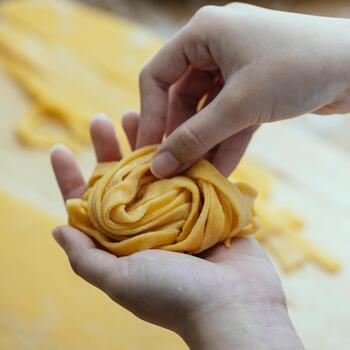
Mary has been recovering from a major brain surgery.
Transcript Available
Ryan: Welcome to the Speak My Language program. In each episode, we share the wonderful life experiences of people with disability living in our multicultural community. I'm your host, Ryan Chen, and I work for the Ethnic Communities Council of Queensland. In this program, we will hear how people with disability living in our multicultural community use newly acquired skills and community resources to live well every day. We not only invite people with disability to tell their own stories, but also invite special guests from various organisations to share useful information, including great places to go and activities and opportunities suitable for people with disability. Hello everyone, welcome to our program. Our guest today is Mary. She will share with us some of her hobbies and interests, as well as hands-on experience on how to live a happy and fulfilling life. Our guest today has chosen to use an alias, Mary. She will share her story with us. Hello Mary, welcome to our program.
Mary: Thank you.
Ryan: I heard that you like making pastries. When did you take up this hobby?
Mary: I took up this hobby when I was in university.
Ryan: I heard you stayed in a rehabilitation centre for a while. Could you briefly tell us what led you there and how you rediscovered this hobby during that time?
Mary: I underwent a surgery, so after that I went to the rehabilitation centre for rehabilitative training. During the rehabilitative training, I rediscovered my interest in making pastries.
Ryan: After the surgery, what aspects of your physical abilities do you feel have been affected that you hope to train or improve during the rehabilitative process?
Mary: After the surgery, it was mainly my memory and coordination abilities that were affected. So with this rehabilitative training I can regain these capacities.
Ryan: I see. Could you please tell me, did the staff at the rehabilitation centre provide any support for your hobbies, such as cooking and making pastries, in terms of ingredients, seasonings, kitchen utensils, etc.?
Mary: Yes. In fact, in the rehabilitation centre, cooking is one of the rehabilitative activities. I have made a lot of Western pastries during my time there. The rehabilitation centre provided food ingredients and kitchen utensils, and there were rehabilitative trainers working together with me.
Ryan: I'm curious, how did you feel when you shared the food you made with other patients?
Mary: Being a patient myself, I could fully understand how joyful it is to have special meals during hospital stays.
Ryan: I understand. It also added variety to their meals, so it must have added some joy to their hospital stay?
Mary: Yes, when the chef in the kitchen saw the food I made, they joked about losing their job.
Ryan: Well, you must be doing pretty good then! You told me earlier that pastry-making might be a type you've particularly enjoyed recently. What in particular attracts you in pastry-making?
Mary: First, I have two children, and they love pastries. Ever since we started making pastries at home, every afternoon when I pick them up from school, they always ask, "What's new today?" Furthermore, the whole process of making pastries is very interesting. The steps involve controlling the dough and water, filling preparation, the amount of seasonings, and adjusting the temperature, since the weather affects it as well. The taste of the pastries varies with these different factors.
Ryan: Indeed, I understand. I cook myself, so I know that many details will affect the outcome. Are there any particular types of pastries that you especially enjoy making, since "pastry" is quite a broad term?
Mary: Of course, dumplings come first as all Chinese love them. We make dumplings with different fillings, like cabbage with pork and celery with meat. Then there are steamed buns. Recently, I’ve made buns with cabbage, vermicelli and meat, as well as fresh meat buns. Lately, I've mostly been making scallion pancakes; my children love them.
Ryan: I see.
Mary: It is crispy and smells delicious, and sometimes I'll sprinkle some sesame seeds on top, so they are sesame scallion pancakes.
Ryan: Do you have any plans to open up a store, Mary?
Mary: Haha, I haven’t thought about it yet.
Ryan: Because there are so many varieties, and there are some that people particularly like, so it must be very good.
Mary: Yes.
Ryan: After you left the rehabilitation centre, did you continue to make pastries? Have you continued doing this at home?
Mary: Yes, during the hospital stay I made mostly Western pastries. When I came back home for recovery, my carers were of Chinese background, so they were mainly good at making dumplings, steamed buns, and egg tarts. So we have tried these.
Ryan: Do you think it’s fun to make these pastries and desserts with others?
Mary: I think it’s a lot of fun. And most importantly, they all like it too. Doing it together, from mixing and kneading the dough, preparing the wrappers, making and stuffing them, to the final step, let it be steaming or baking, including cleaning, I enjoy every step of it because the whole process represents the completion of a project.
Ryan: Hearing you share this, I have gained a new understanding of washing dishes. I can understand that the entire process is enjoyable, and you can share it with many other people, including staff and family members. In addition to making pastries, have you picked up or discovered any other hobbies after leaving the rehabilitation centre that you can share with us?
Mary: Of course. Making pastries was only a part of the rehabilitative activities; I also did some exercise. I am lucky that there is a park near my home. It has a large green belt and is connected to various parks nearby. So we can do some exercise depending on our needs: whether we want to walk for an hour or half an hour, we can adjust the activity level accordingly at the nearby parks.
Ryan: It sounds like this hobby is also highly practicable. Many of us living in Australia may know that there are often many parks big and small in our neighbourhood. For the parks that you visit, are they all well-equipped with a wide range of amenities?
Mary: Yes, in the parks, amenities like restrooms and drinking fountains are always available. There are also a range of fitness equipment and children's play equipment, as different parks have different designs and features. So my carer goes with me to the park to exercise. Sometimes, if my children are at home, like on weekends, we will go to different parks together to exercise and have fun.
Ryan: This is great. Just like making pastries, you can invite other people to join in, such as family or carers. The process might involve connecting and chatting with each other, which may make time pass more quickly. Speaking of time, our interview is almost coming to an end. Finally, I would like to ask Mary if you have any tips for our listeners who might be interested in learning to make pastries?
Mary: Of course. In fact, a lot of information can be found online, so you can watch videos and read about instructions on various pastries on websites. You can choose according to your own interests, whether you prefer Western or Chinese styles of pastries, as ultimately, it's all about enjoying with your family. The whole process of making pastry is actually helping your brain recover. It involves preparations, such as what ingredients to use, what steps and order to follow, and you need to monitor it and check the process constantly. Of course, after spending so much time and effort, there is a very good reward at the end, which is enjoying the delicious outcome.
Ryan: Yes, this is also very important. The hobby gives you a quick and rewarding result. You put in the effort and time to make this food, and then you can enjoy its deliciousness right away.
Mary: Yes.
Ryan: Okay, thank you Mary for joining me today. I learned several things from Mary's story, such as finding your own interests and doing what you love. In the process, you get to enjoy yourself and possibly build good relations with others, like family or carers. Whether it's making pastries or taking a walk in the park like Mary does, they are good hobbies that are beneficial to health. This is what I learned. Mary, do you have anything to share with our listeners at the end of the program?
Mary:Yes. I think maintaining a positive attitude is the most important thing. Then you need to actively participate and keep trying new things. In this way, you can bring positive energy to yourself and the people around you.
Ryan: Very good sharing. Thank you Mary for your time today. Dear listeners, if you found our interview today interesting, please follow our program in the future to hear about other interviews. Thanks.
Mary: Thank you.
Ryan: If you have enjoyed our program, please visit the official website of Speak My Language at speakmylanguage.com.au to learn more. You are also welcome to share this program with your family and friends. Follow us on our social media platforms Facebook, Twitter, Instagram and LinkedIn to spread our message across Australia and around the world. The Ethnic Communities Council of Queensland is proud to produce Speak My Language for Queensland. Speak My Language is funded by the Department of Social Services and produced by the Ethnic and Multicultural Communities' Councils and Multicultural Councils of all states and territories. Our broadcasting platform partners include SBS and NEMBC.