




Dancing is an innately human impulse, shared by all cultures. Even before the earliest of civilisations, dance has been a core part of ceremony, ritual, celebration and entertainment. Dance allows us to express ourselves individually and connect with our communities collectively.
This is no different for people who are living with disabilities. Whether it be through freestyle dance or adaptive dance programs, people can enjoy the magic of movement in the way that best celebrates their body and expression. Additionally, the benefits of dance and movement therapy are numerous. It's a great form of exercise, it improves balance, strength, muscle coordination, spatial awareness and more. It allows people to connect with their bodies and each other. Most importantly, it's fun! Making time for fun is probably one of the most important ways to live well.
During our interviews, Speak My Language has spoken to experts of dance from different culture and language backgrounds to provide insight into the inclusive opportunities to get moving across Australian society.
Eri Mullooly-Hill Konishi is a trained Dance Movement Psycho Therapist from Japan, who studied and gained her qualifications in London. She now lives and works in Hobart, Tasmania, where she continues to empower people through the magic of movement.
Eri has worked closely with people who have Dementia as well as adults and children with intellectual disabilities during her workshops. She explains that her practice is "more about 'being moved' than 'moving,' because our body is mainly being guided by sensations, feelings, images...what comes naturally from within, rather than from the intellectual head. In those moments, we can just be and reconnect to who we truely are."
Participants in her workshops have described them as freeing, energising and playful. Eri's sessions are truly inclusive, as she holds workshops for small groups and the general public, and will tailor the workshop to people's individual needs. If you are located in Hobart, you can find Eri at Dance Spring or Second Echo Ensemble.
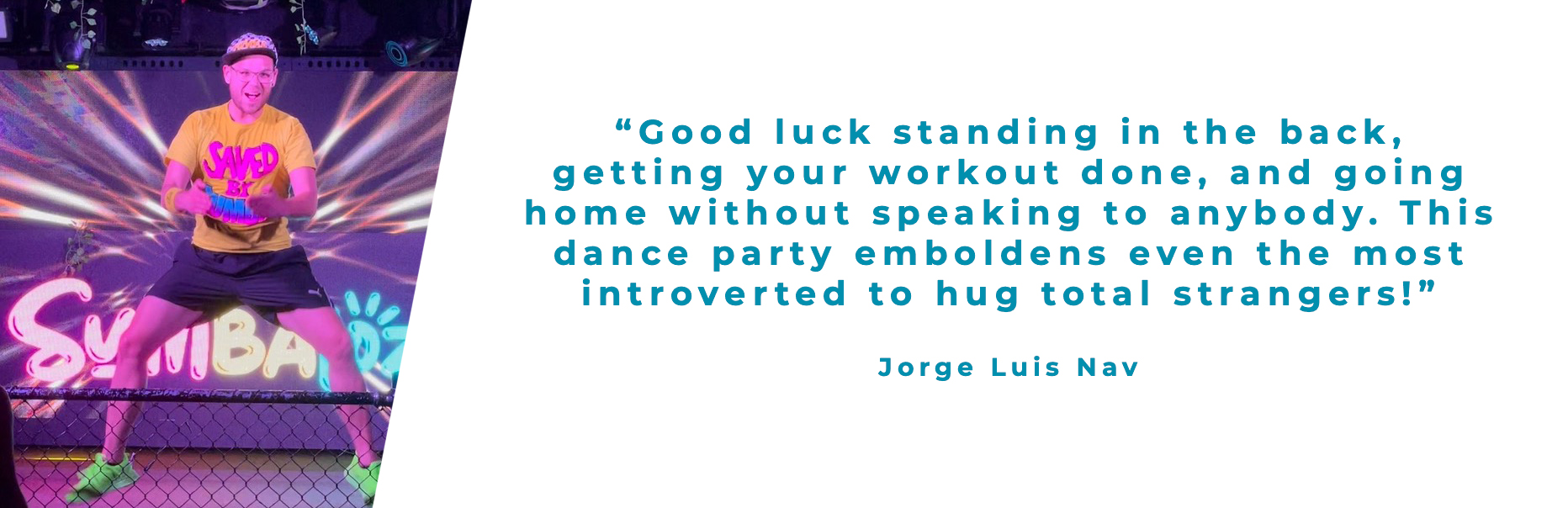
Latin American dance is a more fast paced option for those who want to break a sweat. After Zumba took the world by storm, many Latin dance instructors have started tailoring their sessions to accomodate people of different needs and fitness levels. We recently interviewed Jorge Luis Nav who started his own Latin dance Enterprise, Sumbaloz, in Adelaide.
As Jorge himself lives with a disability, he knows firsthand how inclusive dance sessions can empower someone to live well. He insists that one of the best parts of joining a dance class is not the fitness, but rather the friendships formed and fun shared. He warns those thinking of joining his classes, "good luck standing in the back, getting your workout done, and going home without speaking to anybody. This dance party emboldens even the most introverted to hug total strangers!"
Whether you turn the music up to dance at home alone, join an inclusive class or pursue movement therapy, dance may very well become your secret to living well. Are you a person with a disability who loves to dance? Get in touch with us to share your story.
Related Content
- 一緒にダンスしましょう - Listen Now
- Zumba: un entrenamiento bailable divertido - Listen Now